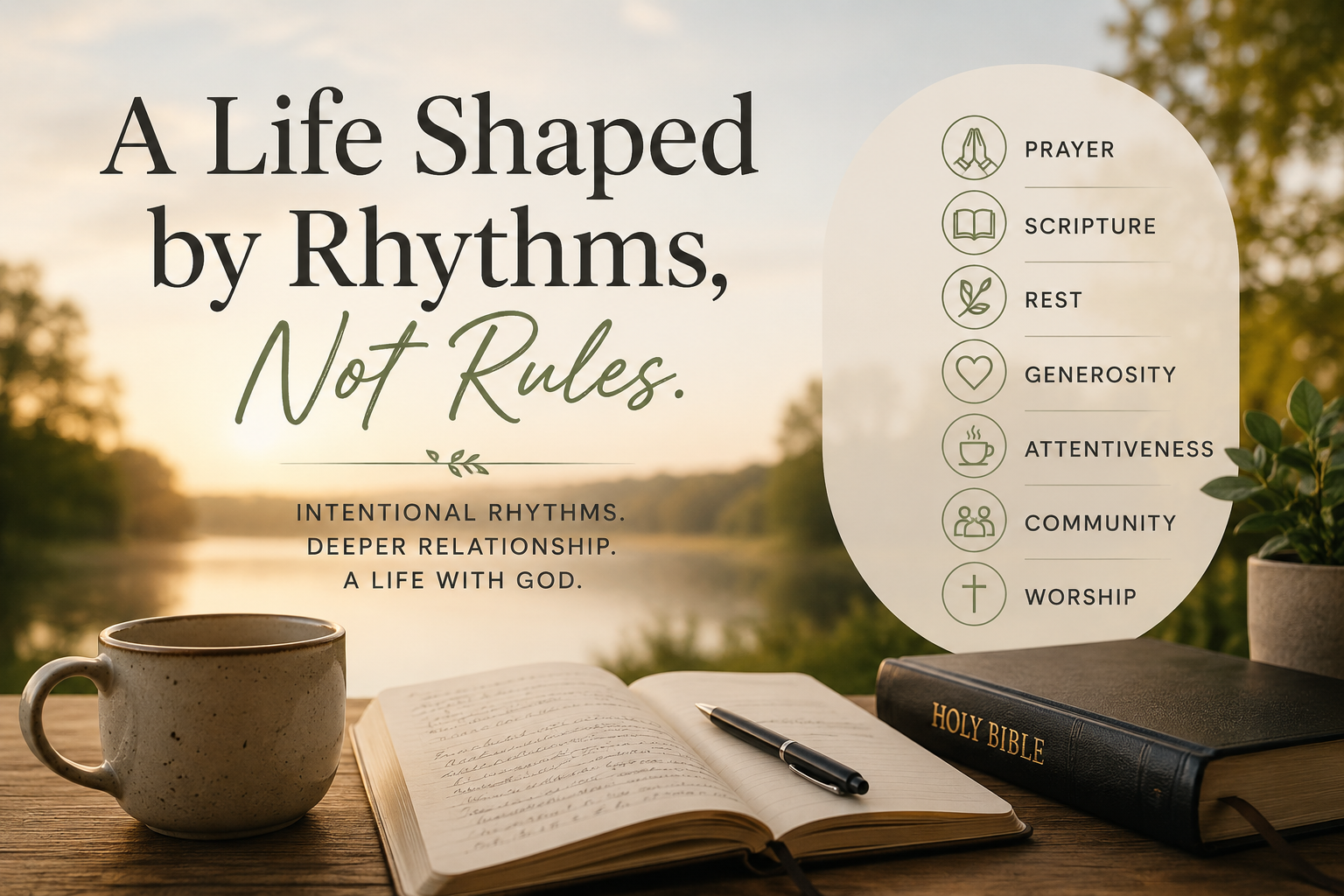
A Life Shaped by Rhythms, Not Rules
Many Christians have heard the phrase, “Christianity is not about rules, it is about relationship.” In many ways, that statement is deeply true. Jesus did not come simply to give us more regulations to follow. He came to invite us into life with God. The heart of the Christian life is not performance, but communion. It is not about earning God’s love, but learning to live in response to it. At the same time, relationships are often shaped and sustained through rhythms. Healthy friendships grow through regular connection. Strong marriages are formed through intentional presence and shared practices. In the same way, our relationship with God is nurtured through rhythms that help us remain attentive to Him in the middle of everyday life. This is where the idea of a Rule of Life can be helpful when it is understood correctly.
Historically, a Rule of Life was not meant to be a rigid list of regulations designed to create pressure or control. In many monastic communities, the word “rule” came from a concept more closely related to a guide, framework, or pattern for living. It was intended to help believers structure their lives around practices that created space for prayer, Scripture, worship, rest, work, generosity, and community. In today’s world, the phrase “Rule of Life” can sometimes sound harsh or overly restrictive because we often associate rules with legalism. But at its best, a Rule of Life is not about trying harder to impress God. It is about intentionally developing rhythms that help us remain connected to Him.
These rhythms are not ends in themselves. Prayer is not about checking a box. Scripture reading is not about religious performance. Silence, rest, generosity, and worship are not ways to earn favor. Instead, these practices create space for attentiveness. They help slow our hurried lives and open our hearts to the presence of God. A healthy Rule of Life is also realistic and grace filled. It recognizes that spiritual formation happens gradually over time. The goal is not perfection, but faithfulness. These rhythms are meant to support life with God, not become burdens that weigh us down.
Over time, intentional rhythms begin to shape us. They help form a life that is steadier, more grounded, and more attentive to God’s work in everyday moments. In a distracted and hurried world, these practices become gentle reminders that our lives are ultimately rooted not in striving, but in abiding. A Rule of Life, then, is not about living under pressure. It is about creating intentional rhythms that help us walk more closely with Jesus in the ordinary flow of life.
Steve Lawes serves as the lead pastor of Keys Vineyard Church, founder of the Online Bible Institute Network, and leads the Christian Practices initiative through Tower of Praise, Inc. His heart is to help people grow in a steady and authentic relationship with God through simple, accessible rhythms of Scripture, prayer, and spiritual formation.